
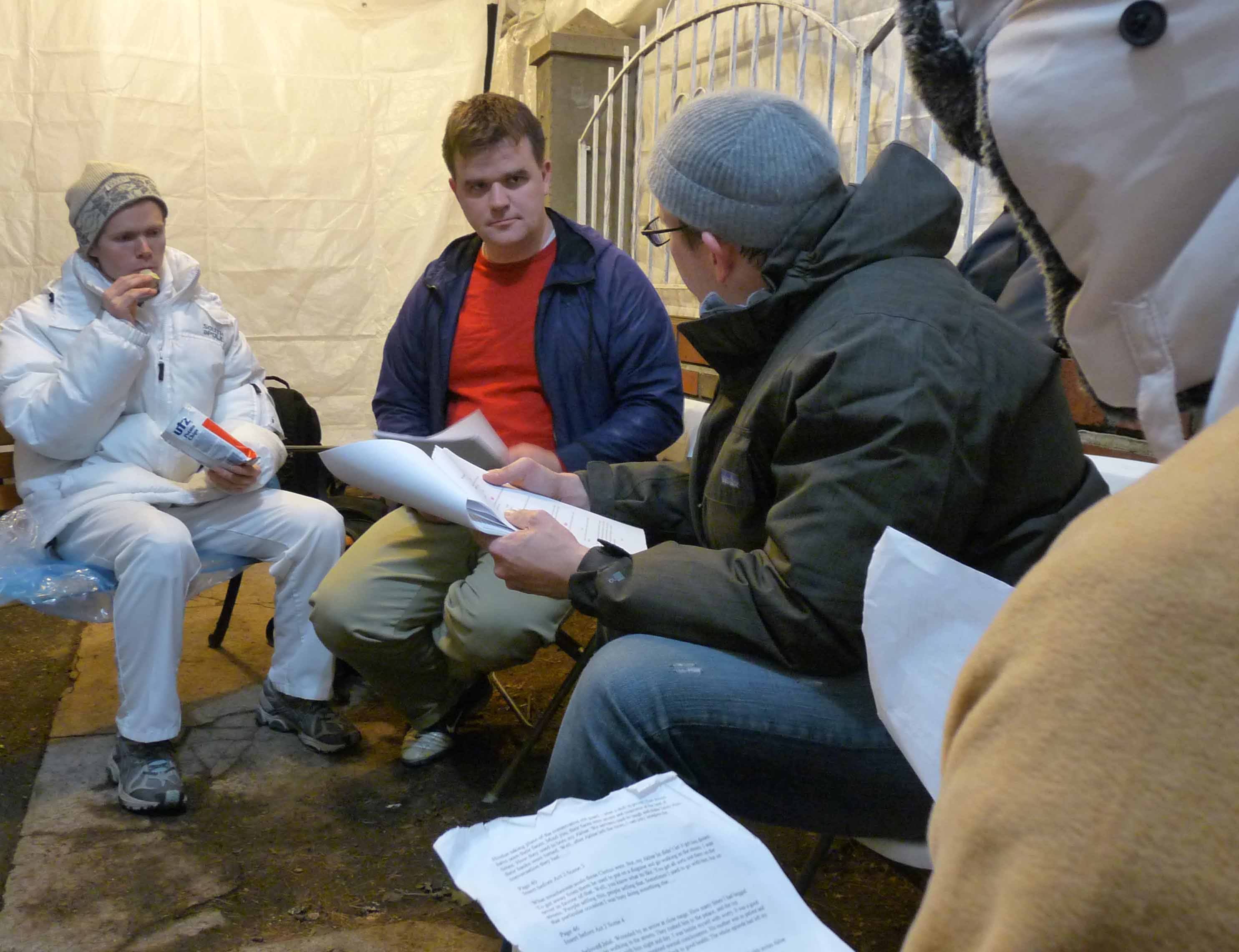
 In the world of competitive athletics and adventure sport, whether or not you have succeeded or failed is easily measured. A stopwatch, a tape measure, or simply crossing the finish line are the incontrovertible guides, as to how your achievement can be objectively judged. If you are setting a world record than your effort and your struggle to succeed will be watched closely by a global audience.
Some sports have set standards that remain fixed, which can easily capture the popular imagination of a world audience. The great tests of speed, power, and endurance remain elusive and almost certainly unattainable to the vast sweep of humanity.
 You will be extolled for climbing Mount Everest and be but a footnote if you fail. That is if you fail and still return to camp. You achieve a different sort of notoriety if you do not survive the journey back to Terra fir-ma. It has been more than 50 years since the 4 minute mile was first broken but still it remains a significant indicator of excellence for runners who manage to attain it.
Amateur theater is an art form that is glaringly difficult to perfect and grudgingly difficult to be objectively judged. The odds of even creating a memorable original script and then producing something noteworthy on a stage is statistically slim to impossible to achieve . As one who was once a Theater Major in University I understand all too well the incredible challenge of writing a captivating script, find willing and talented actors, and then to stage a production in which you will be rewarded, if you are lucky, with only heartfelt applause. The staging of an original Historical drama pushes the odds of success even further into the realm of impossibility.
 Yet on April 12, before an audience of his fellow students of Sri Chinmoy, Tejaswi Van Der Walt, along with the writing and directorial assistance of Devashishu Torpy, staged an amazing monumental play. It was an original production called, ‘Akbar the Great’. That he selected as his subject a 16th century Mughal emperor is not surprising. Sri Chinmoy himself had written many short stories about this, perhaps the greatest of all the Mughal Emperors. A man born into power and wealth, who throughout his lifetime sought not just more power but also Spiritual enlightenment for himself and the world he ruled.
The play was performed with almost no real rehearsal under weather conditions that were uncharitably frigid, before an audience, who the majority of which, English was a second language. These obvious elements just begins to show the tip of the colossal challenge confronting the production. Add to this a running time of almost 2 and a half hours and the recipe of catastrophic disaster should have been it’s inevitable downfall. Nothing of course would be further from the truth.
Akbar the Great was in my estimation a supremely enjoyable and lastingly memorable experience for all who were present that cold April night. That the audience endured several hours of uninterrupted hard bench seats, had to rub their hands and stamp their feet simply to maintain circulation, will just add to the brilliant memories of the performance. Akbar shone, if not with the radiance of perfection, than certainly with the luster of true brilliance. There was an harmonious balance and evenness in all its elements, right from the cast, down through the set, script, costuming, and direction. The audience can say that it was offered a work in which they could both laugh and cry and in the end see, that the sum of all its hard working parts, were something special, powerful, and self transcendent. Tejaswi’s motivation he describes simply, “I wanted to inspire people.” That he succeeded so undeniably is a mark of his courage, talent, and commitment to an astoundingly difficult project. Keep in mind that he was also able to swim the English channel in his first attempt in 2000 (13 hrs 21 minutes) and you can have some idea of his courage in jumping wholeheartedly into the frigid and impossibly challenging theatrical waters
 Devashishu who co authored the play was the director as well. He had first talked with Tejaswi about doing a play the previous August. Two celebrations by that time had taken place since their teachers passing and they both felt it was time to do something big. Performing skits and plays was an endeavor that Sri Chinmoy himself had always encouraged in his students. Tejaswi had said to him, “if I have an idea will you help me. I said sure.” In October Tejaswi he said came up with the idea of doing a play revolving around the life of Akbar. He said, “that would be cool, and then I didn’t do anything.”
Tejaswi proceeded to do research throughout the fall and early winter. What the study provided was clear evidence that the life of Akbar was more interesting and compelling than they both imagined. Devashishu says, “He did more work than anyone else to bring all religions together.”
He confesses, “I don’t get going unless the deadline is approaching fast.” It was only in January that he started to read in detail the history of Akbar and then it was not until late February and March that Tejaswi started to send him scenes that he had written. He admits that he procrastinated and admits that he had never co-written on such a big production before. His most shocking admission, “I didn’t really get something down on paper until perhaps 3 weeks before the production.”

 The play is less than 2 days away from being performed and the massive stage is being slowly constructed under very wet conditions. Sudhip has designed a monumental stage for a mammoth production. The play in many ways fits comfortably under the Umbrella of a performance group that Sri Chinmoy created some years ago. It was called Udar’s Unbounded troop. This performance will require a very large cast and also a very large work crew.

 Udar who will perform in Akbar is comfortable in wearing many hats. Including one as part of the construction crew.
Abhijatri oversaw construction of the set.
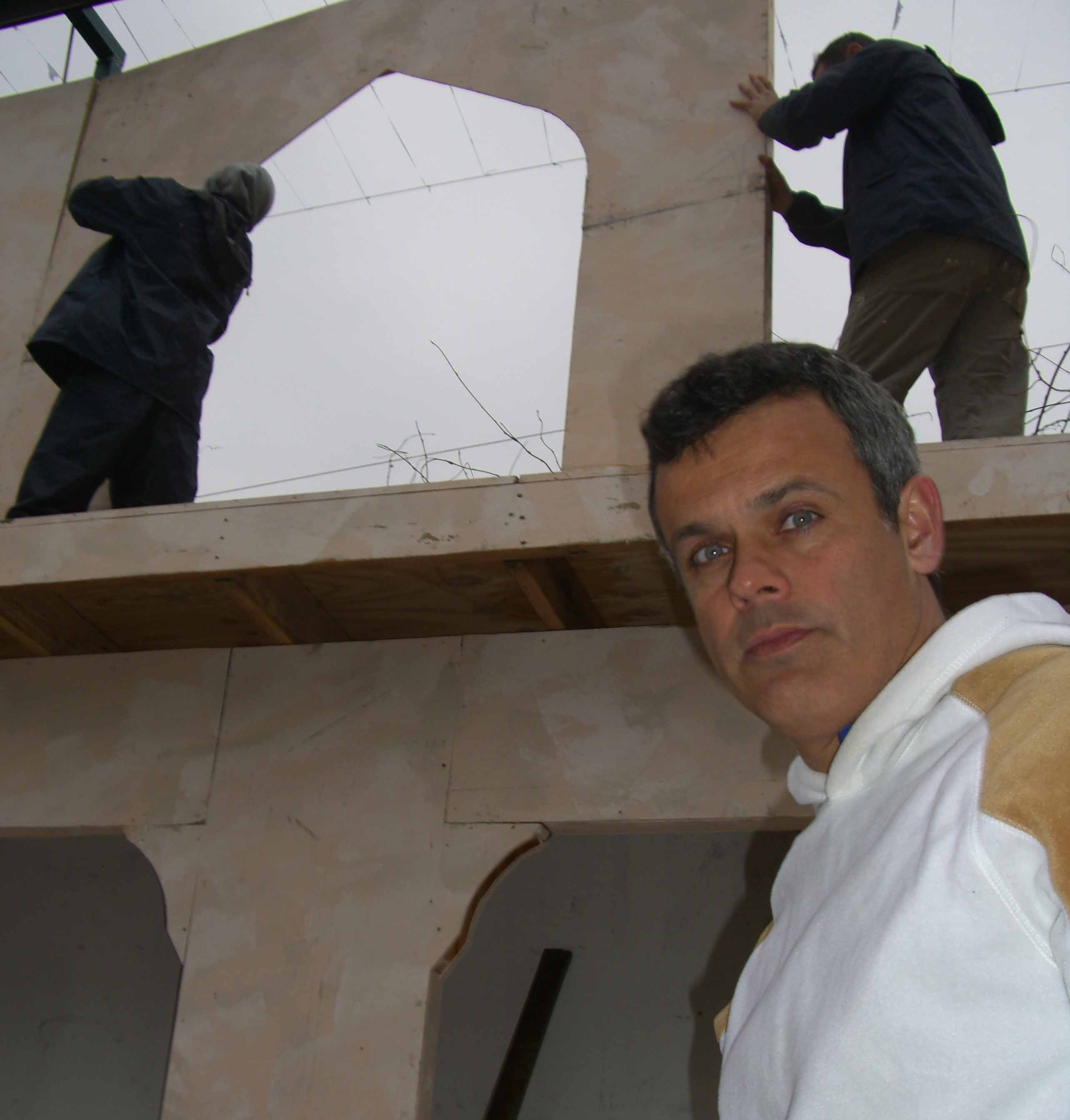

Gangane has an important part on stage and in finding a useful place for this screw.
Devashishu, the director chose not to act in the play in order to oversee all elements of the production.

 It is the afternoon of the 12th and the play is to be performed that evening. The set is not ready so the actors rehearse in a nearby back yard. The rehearsal has been carefully timed so that the actors know when to arrive for their scenes. For the first time blocking takes place, admittedly on a lawn without props but at least the actors have some idea of the staging. Tejaswi has the most difficult role of all. He is Akbar and though he has written most of his own lines the job of memorizing them all is immense.
Gangane is a Jain priest.


Budhsamudra will play Akbar’s evil foster brother Adham Khan. He has a long history of acting and enjoys the chance to entertain and inspire people.
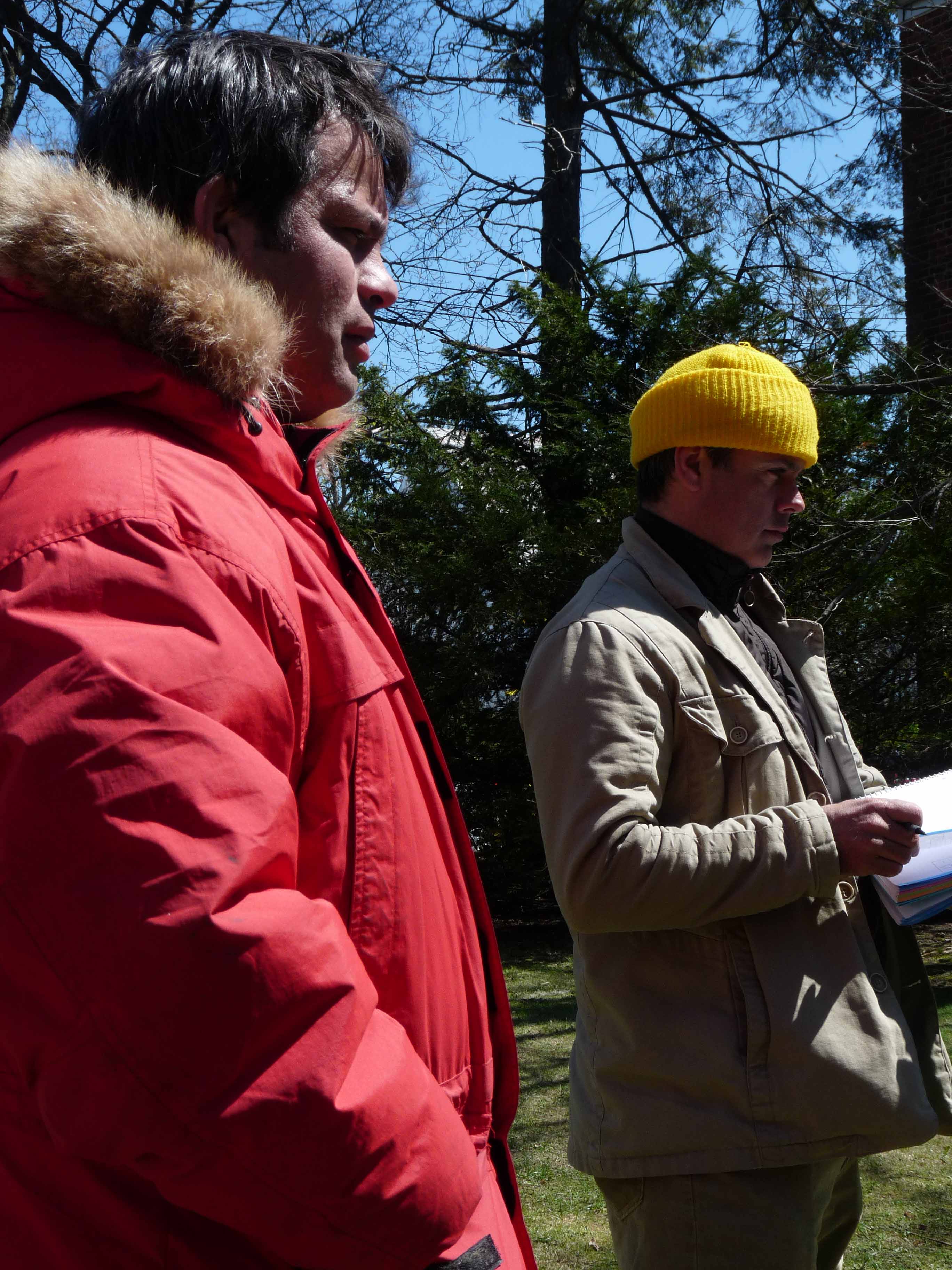

“It’s always last minute but this time it is a little more last minute than usual,” says Sahadeva who plays the narrator Jauhar. He says of these productions, “It is one of the rare times in which we all come together.” He describes how the intense effort of such a project is exactly the same as when Sri Chinmoy was still present. He says, “I think he would be proud of us. He is the one who trained us, to be the like this, and give so much of our time. It is the sense that everyone is giving everything they have that the magic comes.”
 There is one short run through on the set.
Jauhar….part of opening monologue
I have a tale to tell. Now, you may look at this tired body, these crooked legs, my tufted ears and these rheumy old old eyes and think to yourself, what kind of tale could this dried root have to tell? But my friends, by the grace of God, these tired eyes have seen such sights that the celestialsth envy these ears have imbibed ambrosial discourses that shimmered on the air like jewels adorning the most enchanting princesses. This wizened body has served he whose peerless vision penetrated the veil of the Divine, whose dauntless valor echoed and re-echoed throughout the world and whose compassion and wisdom were a beacon in an age of savagery and wickedness.
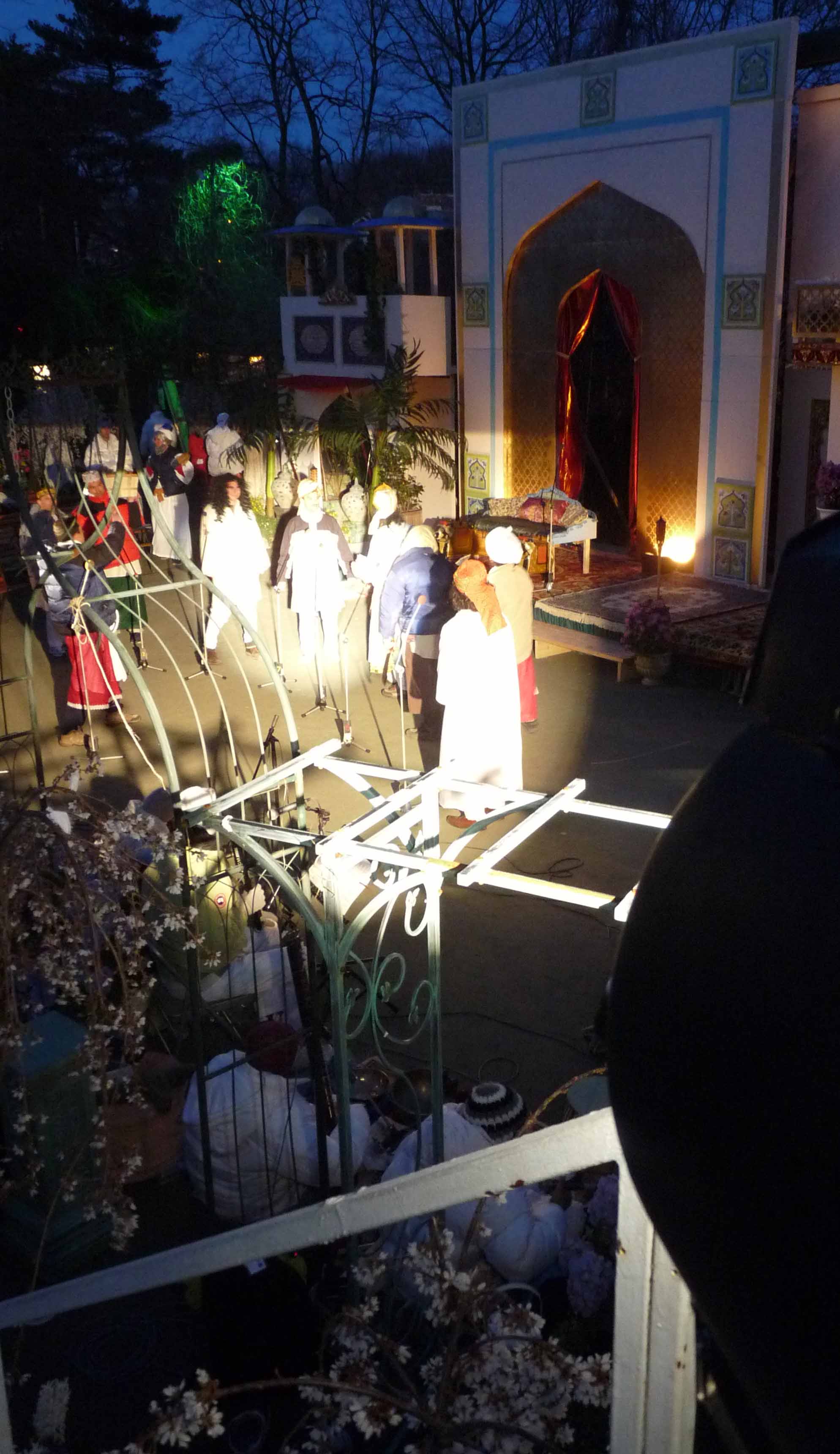
 Nobody seems panicked. It will be the first and only run through for the lights, audio, and musicians who have very simple cues as to when and what to perform.
 Sheikh Salim: God sees inside the secret hearts of men and knows that your mighty soul is not satisfied with the worldly trappings of name and fame. Yours is a mystic soul, Jalaluddin. It is restless for God. You will never find peace until it dives into the ocean of God’s love. Then it will merge and become the ocean itself. You know deep within yourself, that the things of this world are ultimately meaningless, useless and utterly false. They lead us away from our true destiny which is the Divine Intelligence within us. God wants me to tell you that great though your earthly destiny is this lifetime, your spiritual destiny in future lives will far eclipse it. Your soul will be a beacon for humanity that will illumine all of the worlds.

The veil that divides you from God is so thin, Jalaluddin! It is gossamer! A butterfly’s wing! Seek Him! Seek him earnestly and you will find Him! The bliss of God union will be yours forever!


Atga Khan (kaivalya) is a loyal Prime Minister to the Emperor Akbar.
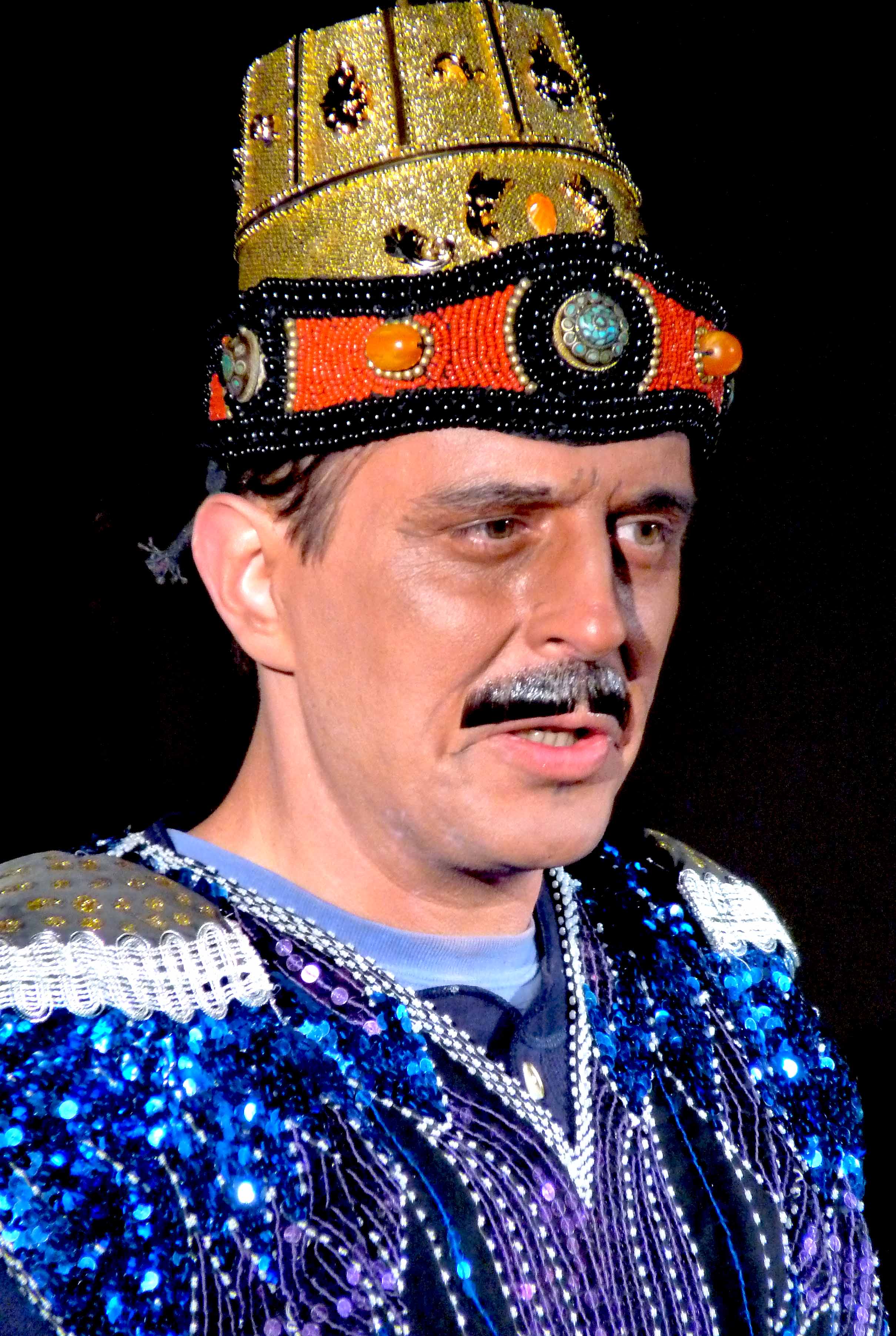
Adham Khan (Budhsamudra), foster brother to Akbar was the notable villain of the performance and met a gruesome end.
 Bairam Khan (Purnendu) ruled Akbar’s empire when he was made Emperor at the age of 14.
 I am ashamed. What have I done with my strength? I curse my life more than anybody else on earth. Becasueth and power, I have offended you and caused the death of so many innocent people. If I did not have such strength, such capacity, then you would not have had to sen me away. This strength of mine ..is it a blessing or a curse? I am going to go on a pilgrimage to Mecca. I will pray to God to forgive me. You have been gracious towards me, Jahanpanah. Your father would be extremely proud of you.
 Mehboob:This is the King’s seal
Habeeb: I know. If he is telling the truth and we turn him away, and the Emperor hears about it, we will lose our heads.
Mehboob: Yes. Mmmm, It’s a difficult one.
Habeeb: Not It’s not a difficult one. We let him in. Then we don’t lose our heads.
Mehboob (Udar) and Habeeb (Mukul) are the comedic elements in a story that might otherwise be too heavy on betrayal and intrigue. Mukul says, “my character was culturally challenged.” Udar says, “playing stupid comes naturally to me.”
 Birbal (Bijon)
The distance between Truth and Falsehood is three inches. It is the distance between the eye and the ear. What we see with the eye is the truth, and what we hear with the ear is all gossip, all falsehood. So the distance between truth and falsehood is about three inches.
 Let me rest and I promise to return as your divine warrior armed with Your Supreme weapons: love, compassion, peace, light and bliss! Together let us rend the veil of ignorance that engulfs the world. O Allah, O God, my beloved Lord Supreme, take this drop and merge it into Your ocean of Compassion Infinite…
I shall listen to Your Command, I shall.
In Your Sky I shall fly, I shall fly.
Eternally You are mine, my very own.
You are my heart’s wealth.
For You at night, in tears I shall cry.
For You at dawn, with light I shall smile.
For You, for You, Beloved, only for You.
Excerpt from My Flute by Sri Chinmoy.
 The audience offers to the performers what Sri Chinmoy would have no doubt asked. Give them a thunderous applause.
 The appreciative cast offers up its own grateful applause.
Heaven and Hell by Sri Chinmoy
Akbar once asked Birbal, “After death, who are the people that go to Heaven and who are the people that go to hell?”
“Your Majesty,” replied the Minister, “only clever people go to Heaven after death. The fools go to hell.”
“Why is that?” asked the Emperor. “Why do the clever people go to Heaven? How do they become clever?”
“They become clever by knowing that there is only one thing worth having, and that is love. When they give love to the world and receive love from the world in return, everything is done. Only those who love the world and get love from the world are clever, and they go to Heaven. Those who do not love the world and do not get love from the world go to hell.”
The Emperor was silent.
Commentary
Birbal’s answer is almost perfect. His only mistake is to say “clever” when what he really means is “wise.” Now we have to know whether we love the world for its own sake, or whether we love God inside the world. If we feel that the Creator and the creation are one, then by loving the Creator of the world we can love His creation as well. Otherwise, we will love the world and expect love from the world in return. And if we do not get love from the world, we will feel sad and miserable.
According to spiritual philosophy, only those who love God in mankind and do not expect anything in return go to the real Heaven. Only those who offer love constantly and unconditionally to God in man can go to the highest abode of peace, light and bliss after death. Those who do not do that will naturally go to an inferior world where these divine qualities are found in less than sufficient measure.
Again, where is Heaven? Heaven is not just a place where we go after death. We go to Heaven and hell every day. Heaven and hell are states of consciousness. In the perfection of the mind, in the peace of the mind, Heaven abides. In the frustration of the mind, in the depression of the mind, hell lives. Every day we experience Heaven and hell in our lives. Frustration, depression, insecurity, worry, doubt, fear, anxiety and jealousy all make us live in hell. Security, beauty, joy, peace, light and love all allow us to dwell in Heaven at every moment.
Excerpt from The Moghul Emperors by Sri Chinmoy.
It is indeed one of the marvellous plays I have ever seen.Congratulations to everyone.
Thankyou Utpal–Very nicely written up.
‘Akbar the Great The staging of an original Historical drama pushes the odds of success even further into the realm of impossibility. ‘ I would say into the realm of a security-line, that definitely quenches the thirst for the God-seekers.
SECURITY
Do not grasp.
If you do not grasp
World-security,
God-security
Will run
And grasp you.
Excerpt from God-Compassion And God-Justice by Sri Chinmoy.